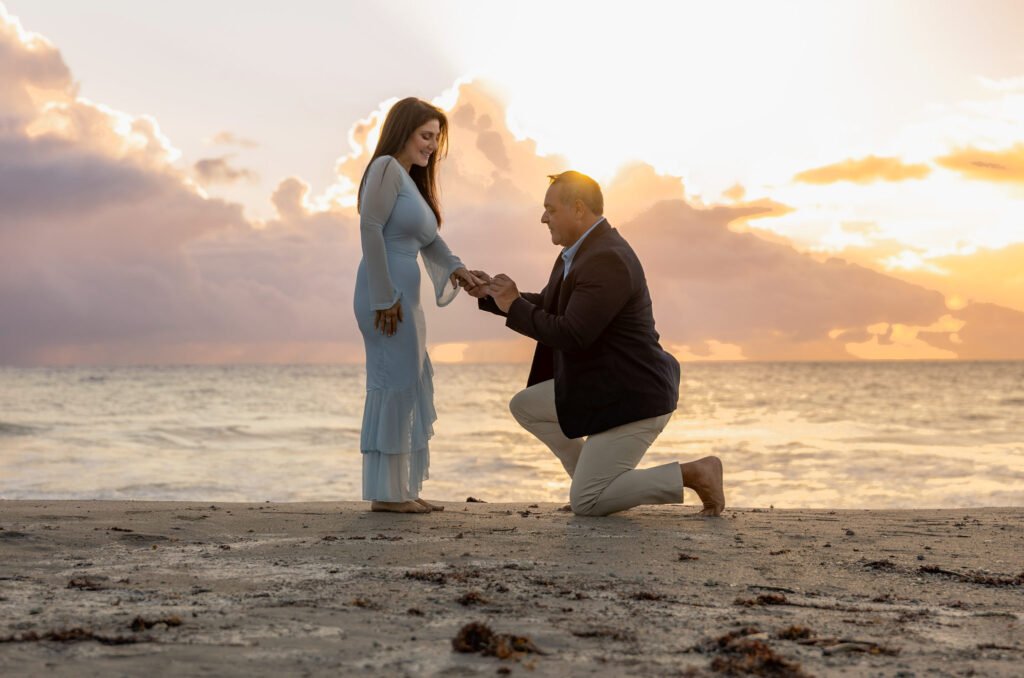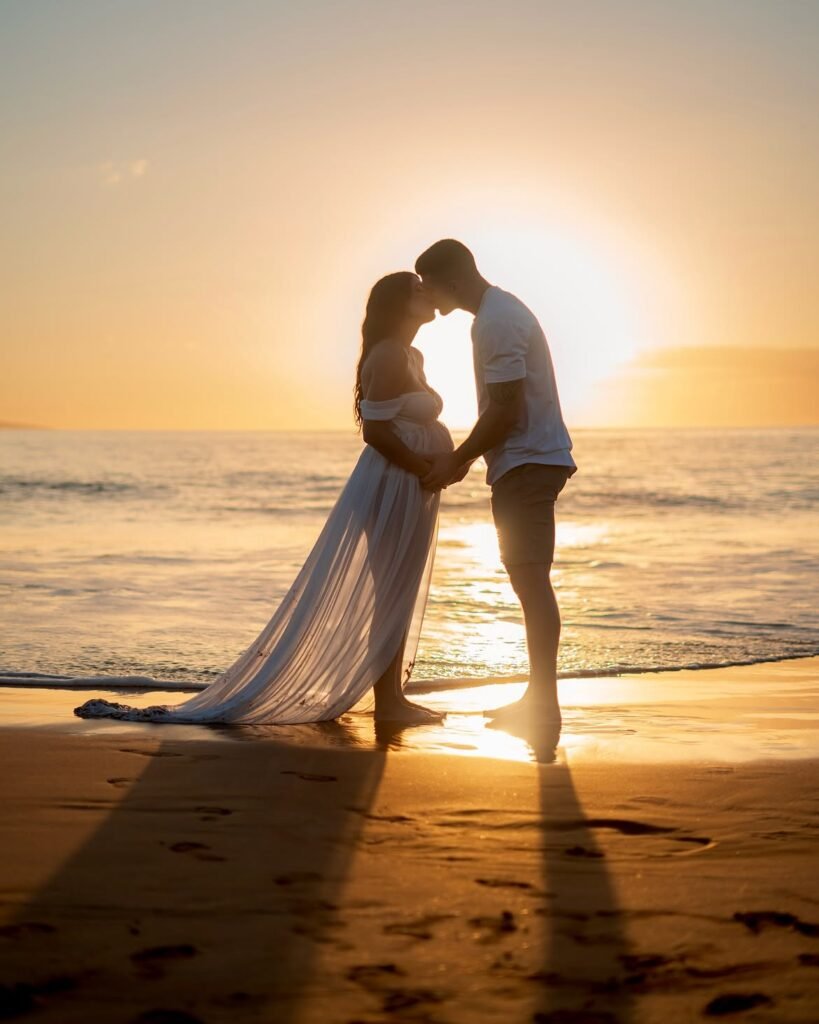
Short answer: wear a long dress in a soft, solid color, in a fabric that moves — chiffon, jersey or knit — fitted across the bump and flowing everywhere else. Skip busy patterns, logos and stiff structured fabrics. In Florida, breathable material matters as much as the color.
That covers 90% of it. Here’s the rest.
Why fitted-then-flowing works
The goal is to show the shape of the bump, not hide it and not squeeze it. A dress that’s tight everywhere looks uncomfortable in photos. A dress that’s loose everywhere erases the bump entirely and reads as a tent.
Fitted across the belly with fabric that falls away below is the shape that photographs well from every angle — and it’s the reason chiffon and jersey maternity gowns dominate this genre.
Colors that work in Florida light
Best: white, ivory, cream, blush, dusty rose, sage, terracotta, camel, deep navy, olive. These read warm at golden hour and don’t fight the background.
Careful with: bright red and neon — they reflect color onto your skin. Pure black loses all shape in low light. Small busy prints turn into visual noise at a distance.
The reliable rule: when in doubt, choose the lighter of two options. Light fabric catches backlight beautifully and glows at sunset.
Fabric: the Florida-specific part
Most maternity wardrobe guides are written for places with actual seasons. Here, breathability matters as much as flattery.
- Wet season (May–October): chiffon, cotton, linen blends. Light layers. Avoid velvet, heavy satin and anything lined.
- Dry season (November–April): almost anything works — knits and heavier jersey included.
- Beach any time of year: long, light fabric that catches wind. That movement is the whole point of a beach shoot.
What your partner should wear
Coordinate, don’t match. If you’re in cream, he’s in white, beige, light denim or soft blue. No logos, no busy patterns, nothing that pulls the eye.
Best default for men in South Florida: a plain white or light linen shirt with neutral pants, sleeves rolled, barefoot or minimal shoes on sand.
Older children
Pick two or three colors from your palette and let each child wear a different combination. Head-to-toe identical outfits look staged. Same family, slightly different looks — that’s the target.
Details that quietly matter
- Fresh manicure — your hands will be on your bump in most photos.
- Watch out for elastic marks. Tight socks or waistbands leave lines that last an hour. Wear loose clothing to the shoot and change there if you can.
- Minimal jewelry. Fingers often swell in the third trimester — don’t force a ring on for the photos.
- Bring a second option. Even in a 45-minute session, one outfit change is usually possible near the end.
- Shoes barely appear. Long dresses cover them and barefoot works beautifully on sand. Don’t overthink it.
Where to find a maternity gown locally
You don’t need to buy an expensive gown. Options that work well:
- Online maternity gown rentals — ship in a few days, cost a fraction of buying, and are built specifically for photos.
- A non-maternity maxi dress a size or two up, in a stretchy fabric.
- A dress you already own that’s fitted at the bust and flows from there.
Order at least two weeks out so you can try it on and swap sizes if needed.
Still not sure? Send us a photo
Text a picture of your options to (561) 444-8952 before the session and we’ll tell you which one will photograph best in your location and light. It’s part of every booking, and it takes two minutes.
Maternity sessions across South Florida start at $295 for 45 minutes, gallery delivered in under 24 hours, partner and older children always included.